Category: Life at Home

  • Simple Ways to Make Your Large Room Feel Cozy

    Simple Ways to Make Your Large Room Feel Cozy

    Simple Ways to Make Your Large Room Feel Cozy

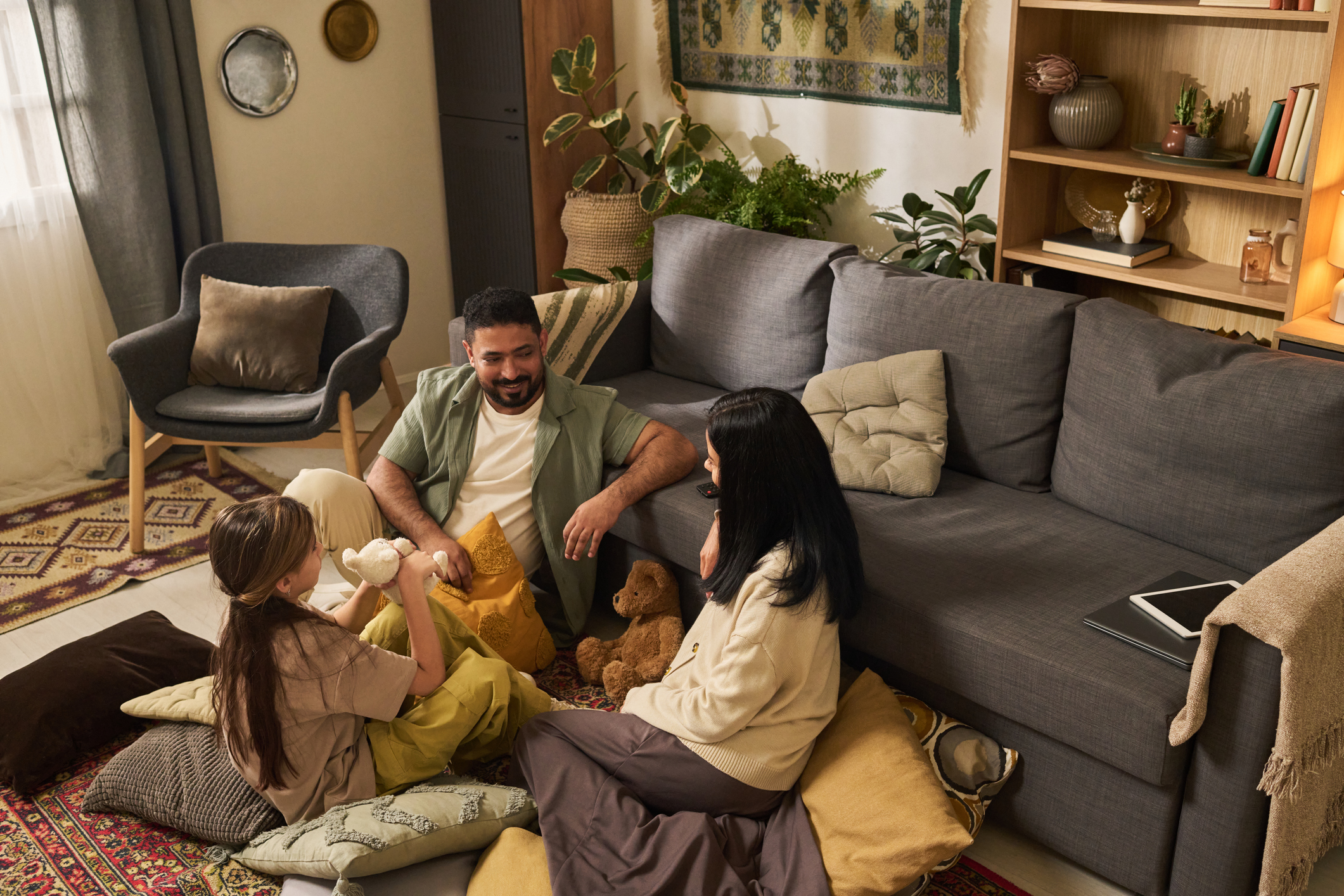
    If you’re wondering how to make a large room feel cozy, you’re not alone. Living in a home with an open floor plan or soaring ceilings often seems like the dream. We imagine airy, expansive spaces perfect for hosting gatherings and enjoying a sense of freedom. But once you’re living in it, that grand room can feel less like a dream and more like a cavernous, cold hall. Sound bounces off the walls, furniture seems to float aimlessly, and it’s hard to feel snug in a space that feels more like a lobby than a living room.

    The great news is that you don’t need to build new walls to solve this. With a few strategic design choices, you can transform your big room into an inviting sanctuary. Discover practical and effective ways to make a large room feel cozy, warm, and inviting.

    Divide and Conquer with Zones

    One of the best strategies for how to make a large room feel cozy is breaking the space into intentional zones. The single biggest mistake in a large room is pushing all the furniture against the walls. This creates a vast, awkward void in the center and makes the space feel disconnected. The solution is to think of your large room as a collection of smaller, functional spaces or “zones.”

    Float Your Furniture to Create a Core

    Floating your seating area is one of the simplest ways to make a large room feel cozy without adding clutter. Start by creating a primary seating area. Pull your sofa and chairs away from the walls and group them closer together. The goal is to arrange the seating so people can have a conversation without raising their voices. A coffee table should be within easy reach of every seat, anchoring the arrangement. This creates a focused center of gravity for the room.

    Designate Secondary Activity Areas

    Once your main conversation hub is set, look at the remaining space and give it a job. By creating different destinations within the larger landscape, you eliminate that “dead space” feeling.

    • Create a Reading Nook: An empty corner is the perfect spot for a solitary retreat. Add a comfortable armchair, a small side table, and a dedicated floor lamp. This turns an overlooked area into a purposeful destination.
    • Establish an Entertainment Zone: If your room is long, you might dedicate one end to watching TV. A console table or a low bookshelf placed behind the sofa can act as a subtle divider, visually separating this zone without blocking sightlines.
    • Add a Game or Work Space: A small round table with a couple of chairs can become a spot for board games or puzzles. You could also place a desk behind your sofa to carve out a home office that feels connected yet distinct.

    Anchor Your Zones with Area Rugs

    If furniture creates the zones, area rugs are what define them. On hard surfaces like wood or tile, furniture can feel like it’s drifting in an ocean of empty floor. Rugs are essential when learning how to make a large room feel cozy because they visually anchor your space.

    Size Is Everything

    When choosing a rug for a large room, think big. A small rug will look like a postage stamp and only emphasize how much empty floor is left. As a rule of thumb, your area rug should be large enough for at least the front legs of all your main furniture pieces to rest on it. This creates a unified and intentional island of comfort.

    Layer for Extra Warmth and Depth

    For an extra dose of coziness, try layering your rugs. Start with a large, neutral base rug made of a natural fiber like jute or sisal. This can cover a significant portion of the floor. Then, place a smaller, softer, and more patterned rug on top, such as a vintage wool or faux fur rug. This adds physical warmth underfoot and a visual depth that makes the space feel more curated and lived-in.

    Lower the Ceiling with Smart Lighting

    High ceilings are a beautiful architectural feature, but they can make a room feel impersonal. Smart lighting plays a major role in how to make a large room feel cozy by lowering the perceived height of the room.

    Forget the “Big Light”

    Relying only on a single overhead fixture or recessed ceiling lights is a fast track to a sterile, cold environment. This top-down lighting casts harsh shadows and emphasizes the vast, empty space above your head.

    Create Pools of Warm Light

    Instead, focus on creating a lower “horizon” of light at eye level. Use a combination of floor lamps and table lamps to create focused pools of warm light where you live and relax. This draws your attention to the inhabited part of the room and lets the high ceilings fade into soft shadows. An oversized chandelier or a large pendant light hung low over your main seating area can also help fill that vertical void and visually connect the ceiling to the furniture below.

    Use Warm-Toned Bulbs

    The color temperature of your lightbulbs makes a massive difference. Avoid cool white or “daylight” bulbs (often 5000K or higher), which can make a room feel like a hospital. Instead, choose “soft white” or “warm white” bulbs (around 2700K to 3000K). This will cast a golden, cozy glow that mimics the feeling of candlelight or a fireplace.

    Soften the Surfaces with Textures and Textiles

    If you want to know how to make a large room feel cozy, start by softening the space with approachable textures and textiles. Hard surfaces like drywall, glass, and bare floors reflect sound, which is why large rooms can have an unpleasant echo. To combat this, you need to introduce soft materials that absorb sound and add physical warmth.

    • Dress Your Windows: Naked windows contribute to a cold feeling. Install floor-to-ceiling curtains in heavy fabrics like velvet, thick linen, or lined cotton. Even when open, the fabric panels will absorb sound and soften the room’s hard edges.
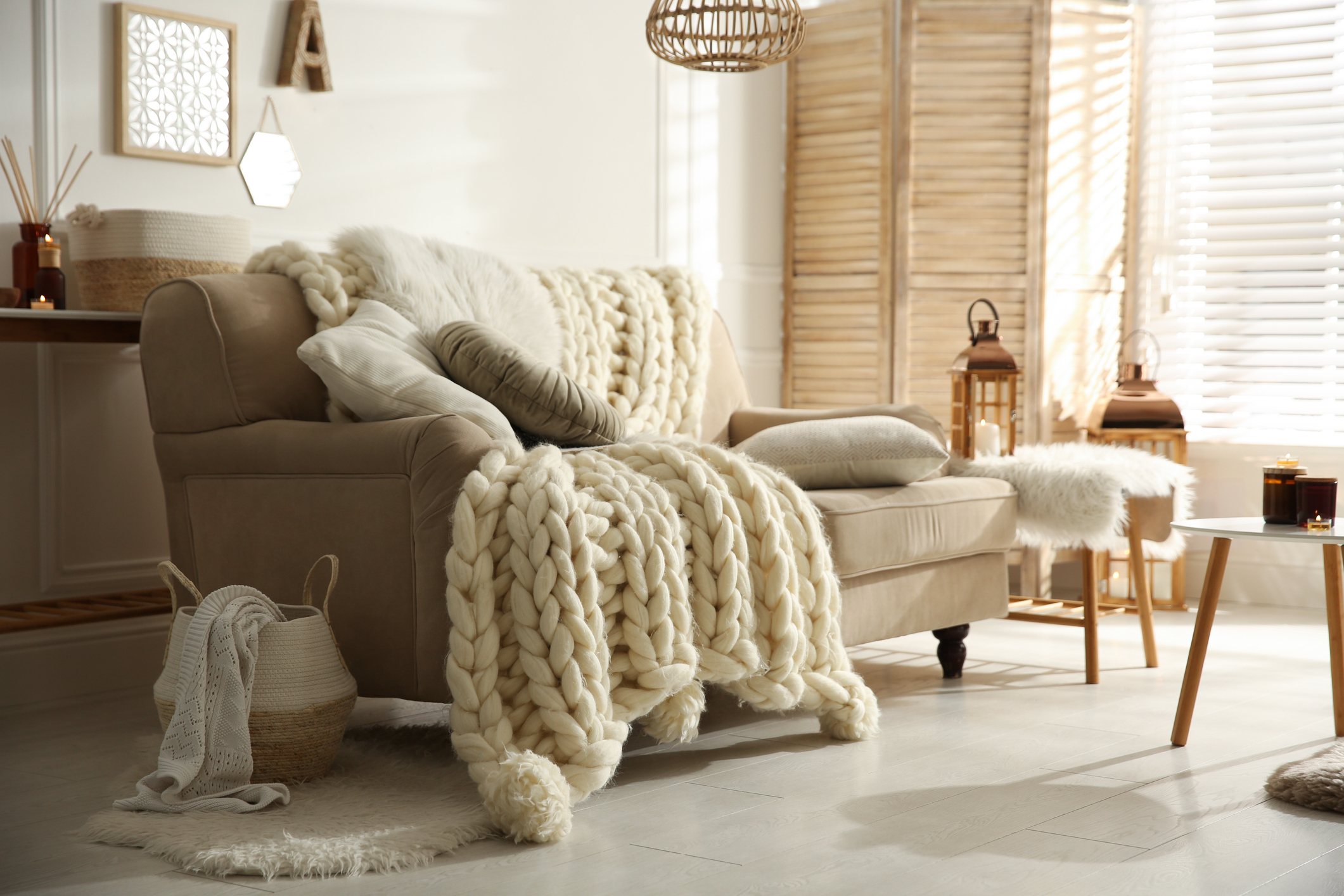
    • Pile on Pillows and Throws: Be generous with your textiles. Load up your sofas with throw pillows in a variety of fabrics—knits, faux fur, and velvet all work well. Drape chunky knit blankets over chairs and keep a basket of extra throws nearby. These items signal comfort to the brain.
    • Choose Upholstered Furniture: Opt for a fabric ottoman instead of a glass coffee table. Choose fabric lampshades over metal ones. The more soft surfaces you introduce, the quieter and cozier the room will become.
    • Bring in Plants: Plants are living texture. Large potted trees, like a Fiddle Leaf Fig or a tall palm, are perfect for filling empty corners and adding organic shapes that soften a boxy room. They bring a life and vibrancy that furniture alone cannot.

    Use Color to Your Advantage

    While white walls are classic, they can feel stark and endless in a massive room with lots of natural light. The right color strategy can make the space feel more enveloping.

    Embrace Darker Hues

    Don’t be afraid of moody colors. Darker paint colors are a surprisingly effective way to make a large room feel cozy and visually intimate. A deep navy, charcoal gray, or warm terracotta can make the walls feel like they are closer to you, creating an instant cocoon-like effect. If painting the whole room feels too bold, try a two-tone effect by painting just the bottom third of the wall a darker color to ground the space.

    Go Big with Art

    Just as a small rug gets lost, tiny picture frames will be swallowed by a large wall. You need art that matches the scale of the room. A massive canvas or a large-scale tapestry can instantly warm up a cold wall. Alternatively, create a gallery wall by grouping several smaller frames together to form a single, large visual unit.

    Simple Changes with Big Impacts

    Making a large space feel cozy is not about filling it with clutter; it’s about strategic layering and intentional choices. With just a few thoughtful changes, you’ll see how easy it is to make a large room feel cozy, warm, and welcoming. Start with one small change: pull your sofa away from the wall this weekend, or swap out your lightbulbs for a warmer tone. You’ll be surprised how quickly the atmosphere shifts from cold and cavernous to comfortable and inviting.

    Ready to find your dream home? Visit SAHomebuilder.com or call 1-855-SAHome1 to explore a wide range of new homes, including quick move-in options. We offer diverse new construction homes across Central and South-Central Pennsylvania. Whether you prefer one of our new home communities or want to build on your own land, we’ll help you find the perfect home to match your vision.
  • Luxury Living: Elevate Your Home on a Budget

    Luxury Living: Elevate Your Home on a Budget

    Luxury Living: Elevate Your Home on a Budget

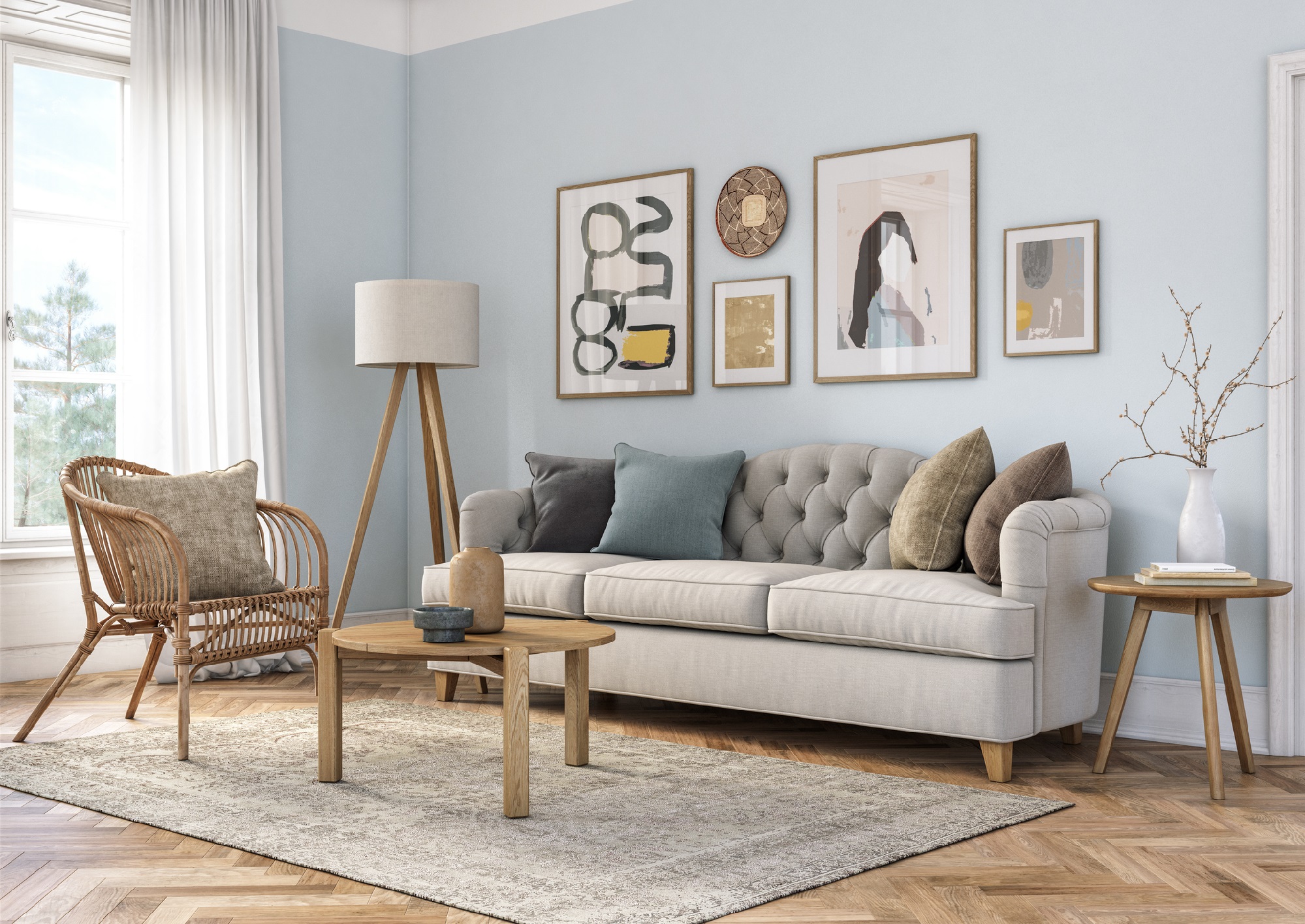
    A home that feels luxurious isn’t about a high price tag; it’s about the feeling it creates. It’s a space that feels calm, comfortable, and uniquely you. Many people think luxury home decor on a budget isn’t possible, but thoughtful details can create a high-end feel without big costs.

    We’ll show you how to transform your living space using simple, affordable techniques. Let’s get started on making your home look and feel more expensive without breaking the bank.

    1. Start with a Clean Slate

    The most effective and completely free way to elevate your home is to declutter. Luxury spaces feel intentional and curated, with plenty of room to breathe. An organized, tidy environment immediately feels more spacious and sophisticated.

    The Art of Letting Go

    Start by going through each room and editing your belongings. Remove anything that doesn’t serve a purpose or bring you joy. Focus on clearing flat surfaces like countertops, coffee tables, and nightstands. This simple act creates “visual breathing room” and makes a space feel more deliberate and less chaotic.

    Smart and Stylish Storage

    Once you’ve pared down, ensure everything that remains has a designated spot. Use attractive storage solutions that hide clutter while adding to your decor. Think woven baskets for blankets, decorative boxes for remotes, and sleek furniture with hidden compartments. An organized home is a peaceful home, and that sense of tranquility is a hallmark of luxury.

    2. Layer in Richness with Texture

    One of the easiest ways to create luxury home decor on a budget is by layering rich textures. Texture adds depth and warmth, making a room feel more inviting and expensive. Layering different materials is a classic interior design trick. It’s a simple way to create a cozy and rich environment.

    Upgrade Your Soft Furnishings

    You don’t need to buy new furniture to make a big impact. Add a plush throw blanket over the arm of your sofa or a faux fur rug on the floor. In the bedroom, create a lavish look by layering your bedding. Combine crisp cotton sheets, a linen duvet cover, and a few decorative pillows in materials like velvet or silk.

    Rethink Your Window Treatments

    Flimsy, cheap-looking curtains can bring down the feel of an entire room. Swap them out for higher-quality drapes made of substantial fabrics like linen, velvet, or heavy cotton. To create the illusion of height, hang your curtain rod several inches above the window frame and extend it wider than the window. This makes the window appear larger and allows more natural light in.

    3. Focus on the Finer Details

    Small details often make the biggest difference. Upgrading basic, builder-grade hardware is a low-cost, high-impact project that can instantly elevate your space. It’s like changing the buttons on a coat; a small detail that enhances the entire piece.

    Elevate with New Hardware

    Take a look at the handles and knobs on your kitchen cabinets, bathroom vanities, and dressers. For a relatively small investment, you can replace them with something more stylish. Hardware in finishes like brushed brass, matte black, or crystal can add a custom, high-end look to even the most basic furniture.

    Let Your Lighting Shine

    Lighting fixtures are the jewelry of a room. An outdated ceiling light can date your space. Replace generic fixtures with something more eye-catching, like a modern pendant or a stylish chandelier. You can find affordable options at online retailers, flea markets, or even big-box stores. Even simply swapping a lampshade for a more textural one can refresh a room’s look.

    4. Harness the Power of Paint

    Color is a powerful tool when creating luxury home decor on a budget. The right color can completely change the mood, making it feel more sophisticated and put-together.

    Choose a Sophisticated Palette

    Instead of a basic white or beige, consider a more complex neutral. Shades like greige (a blend of grey and beige), soft creams, or earthy tones have more depth. For a bolder, cozier atmosphere, try rich colors like navy, charcoal gray, or forest green.

    Create a Focal Point

    An accent wall behind your bed or sofa can serve as a powerful focal point without the commitment of painting the whole room. You can use a bold paint color or experiment with budget-friendly peel-and-stick wallpaper in a chic pattern to add personality.

    Luxury Living: Elevate Your Home on a Budget

    5. Bring Nature Indoors

    Plants and fresh flowers infuse life, color, and a sense of calm into a home. They are a staple in luxury design for good reason.

    Go Big with Greenery

    Instead of several small plants, consider investing in one or two large floor plants, like a Fiddle Leaf Fig or a Monstera. A large plant makes a dramatic statement and can fill an empty corner with life. Be sure to place it in an attractive pot that complements your decor.

    The Elegance of Fresh Flowers

    A simple bouquet of fresh flowers on a dining table or nightstand adds an instant touch of class. You don’t need an elaborate arrangement. A handful of tulips or hydrangeas from the grocery store can brighten a room and make it feel special.

    Create Your Dream Home Today

    Achieving a luxurious home is less about spending a lot of money and more about making thoughtful, intentional choices. With these simple ideas, achieving luxury home decor on a budget is completely doable.

    Start with one or two of these budget-friendly ideas and see what a difference they make. Go ahead and start building the stylish sanctuary you deserve.

    Find your perfect home with S&A Homes. Explore our wide variety of new construction homes across Central and South-Central Pennsylvania, including quick move-in options and build-on-your-land opportunities. Visit SAHomebuilder.com or call 1-855-SAHome1 today to discover your ideal home.

  • Beat the Rush: Your Ultimate Holiday Home Organization Guide

    Beat the Rush: Your Ultimate Holiday Home Organization Guide

    Beat the Rush: Your Ultimate Holiday Home Organization Guide

    The holiday season should be about warmth, celebration, and creating memories with loved ones. However, the lead-up can often feel chaotic, with a long to-do list that makes it hard to feel festive. Reduce that pre-holiday stress with our ultimate holiday home organization tips before the season truly kicks off.

    A well-organized home not only looks better but also functions more smoothly, especially with a busy schedule or guests. Our holiday home organization guide provides a simple approach to help you declutter, prepare, and set the stage for a peaceful and enjoyable holiday. We’ll walk through decluttering key areas, preparing for visitors, and streamlining your decoration process.

    Start with a Smart Decluttering Plan

    Before you can organize, you need to create a clean slate. A thorough declutter clears out the old, makes space for the new (like gifts and decor), and simplifies cleaning. Trying to tackle the entire house at once is a recipe for burnout, so focus on one area at a time.

    Conquer Clutter Zone by Zone

    Start with the high-traffic spaces that will be central to your holiday hosting. For each room, use a simple four-box method to make quick decisions: Keep, Donate, Trash, and Relocate.

    • Living Room: This is where family and friends will gather. Clear surfaces like coffee tables and bookshelves. Sort through magazines, old mail, and miscellaneous items that have piled up to make room for decorations and serving trays.
    • Kitchen: The heart of holiday cooking and mingling. Go through your pantry and fridge, tossing expired items and taking note of what you already have for holiday recipes. Clear countertops by storing appliances you don’t use daily to maximize your food prep area.
    • Entryway: This is the first space your guests will see. Tidy up the coat closet to make room for visitors’ jackets, organize shoes, and create a clear, welcoming entrance.
    Beat the Rush: Your Ultimate Holiday Home Organization Guide

    Prepare for Your Guests with Ease

    If you’re hosting overnight guests, making their space comfortable is a top priority. A well-prepared guest room and bathroom show you care and help your visitors feel at home. Getting this done ahead of time means you won’t be scrambling at the last minute.

    The Guest Room Retreat

    Your guest room might serve as a home office or storage area for most of the year. Now is the time to transform it back into a welcoming retreat for visitors.

    Start by clearing out any personal belongings that have accumulated in the space. Ensure the bed has fresh, clean linens, and provide an extra blanket and pillows. Clear out some space in the closet or a dresser so your guests can unpack and settle in. Small touches, like placing a bottle of water on the nightstand and writing down the Wi-Fi password, go a long way.

    The Guest Bathroom Essentials

    A clean and well-stocked bathroom is a must. Give it a thorough cleaning before guests arrive, and remove your personal toiletries from the counter and shower area to give them their own space.

    Put out fresh towels, a new bar of soap or full soap dispenser, and extra toilet paper in a visible spot. For an extra touch of hospitality, you can create a small basket of travel-sized essentials they might have forgotten, such as a toothbrush, toothpaste, shampoo, and lotion.

    Tame and Organize Your Holiday Décor

    Nothing dampens the decorating mood faster than untangling a massive knot of lights or searching endlessly for a special ornament. A little organization now will save you a major headache later.

    Take Stock and Edit Your Collection

    Before you start decorating, pull out all your holiday items. This is the perfect opportunity to assess what you have and what you still love.

    • Test Your Lights: Plug in every strand to make sure they work. It’s much better to discover a faulty strand now than when you’re halfway through decorating the tree.
    • Inspect Ornaments: Check for broken or damaged items. Repair what you can and let go of what you can’t.
    • Review Your Style: Tastes change. If you have decorations that you no longer love, consider donating them. This prevents you from decorating with faulty items and helps you identify if you need to purchase anything new.

    Implement Smart Storage Solutions

    How you store your decorations is key to keeping them in good condition and easy to find next year. The right storage will make the process a breeze.

    • Use Clear, Labeled Bins: Store items in clear, stackable containers so you can see the contents at a glance. Label each bin with its contents (e.g., “Living Room Ornaments,” “Outdoor Lights”).
    • Protect Fragile Items: Use ornament organizers with dividers for delicate glass balls. Wrap sentimental pieces individually in tissue paper or bubble wrap.
    • Invest in Specialty Storage: Light reels or spools prevent tangles, and wreath bags or boxes keep your wreaths from getting crushed. Store everything together in a designated area, such as a specific closet, attic, or garage shelf.
    Beat the Rush: Your Ultimate Holiday Home Organization Guide

    Embrace a Season of Calm and Joy

    By following these holiday home organization tips, you set the stage for a season filled with peace instead of panic. A decluttered, functional, and well-prepared home allows you to focus on what truly matters: spending quality time with your loved ones.

    Don’t wait until the last minute. Start early, take it one step at a time, and enjoy the process. A little preparation now will lead to a more relaxed and enjoyable holiday for you and your family.

    Ready to find your new home? Visit SAHomebuilder.com or call 1-855-SAHome1 to explore our latest opportunities, from quick move-in homes to build-on-your-land options. With a wide variety of new construction homes across Central and South-Central Pennsylvania, we’re confident you’ll discover the perfect place to call home.

  • Speed Clean Your Home in No Time

    Speed Clean Your Home in No Time

    Speed Clean Your Home in No Time

    When you only have a few minutes to spare but want your home to feel tidy and inviting, speed cleaning is the perfect solution. Whether you’re scrambling to prepare for unexpected guests or just need a quick refresh, you don’t have to clean every square foot. With the right approach, you can work smarter, not harder, and transform your space with minimal effort.

    Here’s your step-by-step guide to speed cleaning your home without the stress, even when time is not on your side.

    1. Start with High-Traffic Areas

    Focus on the rooms your guests or family are most likely to see and use. Concentrating on high-visibility spaces ensures your efforts deliver the biggest impact in the least amount of time.

    • Living Room: Start by clearing away visible clutter like toys, books, or shoes. Straighten throw pillows, fold blankets, and give surfaces like coffee tables or entertainment centers a quick dust.
    • Kitchen: A clean kitchen makes the whole house feel more organized. Tidy up countertops by moving mail, dishes, or small appliances out of sight. Wipe down the counters and the sink for a polished look.
    • Bathroom: The guest bathroom is a high priority when entertaining. Replace the hand towel, ensure there’s enough soap and toilet paper, and give the sink, mirror, and toilet a quick wipe-down.

    Use a timer and spend five to 10 minutes on each room. This keeps you focused and prevents you from getting bogged down.

    2. Conquer Clutter Quickly

    Clutter is the easiest way for a home to appear messy. Quickly tackling it can make any space feel instantly more organized.

    • Grab a Basket or Bin: Sweep through each room and gather out-of-place items, like toys, books, or gadgets, into a basket. Store it somewhere out of sight, like a closet or pantry, and sort it out later.
    • Close Doors: Keep things simple by focusing only on common areas. Shut the doors to bedrooms, home offices, or other less-tidy rooms to limit what guests see.
    Speed Clean Your Home in No Time

    3. Polish Visible Surfaces

    Clean surfaces instantly make a space feel fresh and tidy. Instead of scrubbing every nook and cranny, focus on the areas that are most noticeable.

    • Counters and Tables: Wipe down high-use spaces like kitchen counters, coffee tables, and dining tables. This removes dust, crumbs, or smudges quickly.
    • Glass and Mirrors: Smudged mirrors, glass coffee tables, or sliding doors are noticeable, so give them a quick polish with glass cleaner or a microfiber cloth for an instant shine.
    • Floors: Areas with visible dirt or pet hair, such as the kitchen and hallways, benefit from a light sweep or quick vacuum. Focus only on high-traffic spots; there’s no need to deep clean every corner.

    Keep a multi-surface cleaner and a microfiber cloth on hand. These two tools work wonders on multiple surfaces, saving you time.

    4. Create a Welcoming Atmosphere

    A tidy space isn’t just about cleanliness; it’s about creating a warm and inviting vibe that makes everyone feel at home. Once your home looks neat, focus on small touches that make it feel cozy and complete.

    • Lighting: Bright, harsh lights can feel unwelcoming. Opt for warm lamp lighting or string lights to create a softer ambiance.
    • Add Fragrance: Light a candle, use a reed diffuser, or spritz an air freshener to give your home a pleasant scent. Fresh citrus, lavender, or vanilla are excellent choices.
    • Background Music: Low-volume instrumental or soft jazz music adds a relaxing backdrop and enhances the overall mood of your space.

    If you have extra time, place fresh or faux flowers on your coffee table or dining table. It’s a simple yet effective way to elevate your space.

    5. Keep Expectations Realistic

    Speed cleaning is about making your home feel presentable, not perfect. Most people won’t notice minor imperfections, so focus on the broader picture. After all, your guests are there to spend time with you, not evaluate your cleaning skills.

    Take a deep breath, appreciate what you’ve accomplished, and enjoy your refreshed home. Remember, even a little tidying up can make a big difference.

    Speed Cleaning Is All About Priorities

    By focusing on what matters most, you can make your home look clean, cozy, and inviting in no time. The key is prioritizing high-impact areas, tackling clutter strategically, and enhancing the atmosphere with just a few thoughtful finishing touches.

    Your home doesn’t have to be perfect to feel lovely. It just needs a little effort to shine.

    S&A Homes offers beautifully designed new home communities across Central and South-Central Pennsylvania. Explore exciting opportunities, from quick move-in homes to building on your own land. Call us today at (855) SAHOME1 or visit SAHomeBuilder.com to learn more and find your perfect home.

  • Decluttering Sentimental Items: Practical Tips for a Clutter-Free Life

    Decluttering Sentimental Items: Practical Tips for a Clutter-Free Life

    Decluttering Sentimental Items: Practical Tips for a Clutter-Free Life

    Sentimental items often carry deep emotional value. They remind us of loved ones, cherished moments, and life milestones. However, when they pile up, they can overwhelm our spaces and make it difficult to stay organized. Thankfully, you don’t have to part with all your keepsakes to create a tidier and more intentional home.

    This guide combines practical tips, emotional considerations, and creative organization strategies to help you declutter sentimental items with ease and confidence. By the time you’re finished, you’ll have a space that preserves your most meaningful memories without the chaos.

    Why Decluttering Sentimental Items Matters

    Cluttered belongings can weigh on both your mind and your living space. Sentimental items, while valuable, can pile up quickly, leading to stress and disorganization.

    Decluttering doesn’t mean losing your memories; it encourages you to showcase the best ones and create a space that reflects who you are today.

    By intentionally sorting through these items, you can:

    • Reduce physical and emotional clutter.
    • Focus on the memories that truly matter.
    • Make room for items that support your present life.

    With that in mind, here’s how to approach the process step by step.

    Start Small with Categories

    Starting with a clear plan can make the process less overwhelming. Group your sentimental items into manageable categories, like photos, letters, childhood mementos, or heirlooms:

    • Photos and albums
    • Cards and letters
    • Childhood toys
    • Trophies or awards
    • Family heirlooms

    Focus on one category at a time. For instance, begin with old greeting cards, and sort them into “keep” or “discard” piles based on their significance.

    By working in smaller sections, you keep the process manageable and ensure you don’t get bogged down emotionally or physically.

    Set Boundaries to Control Clutter

    One of the most important steps in decluttering sentimental items is setting clear limits on how much you’ll keep. Boundaries create accountability, making it easier to curate what you truly value while keeping your collection neat.

    Physical boundaries, like a single storage box or one folder per category, help maintain order and prevent over-accumulation. If it’s full, reconsider whether the items inside bring true joy or can be thinned out.

    Focus on What Truly Sparks Joy

    When deciding what to keep, focus on items that bring joy or tell meaningful stories. Ask yourself:

    • Does this item represent a significant memory?
    • Does it still bring me happiness?
    • Would I feel relieved or stressed by letting it go?

    Items associated with guilt or obligation don’t need to stay in your home. It’s okay to honor the memory and move forward without holding onto the physical object.

    For items you’re unsure about, take a picture. This allows you to digitally preserve the memory while letting go of the object.

    Decluttering Sentimental Items: Practical Tips for a Clutter-Free Life

    Organize with Creative Systems

    Creating thoughtful systems ensures your keepsakes stay organized and easy to access. After decluttering, assign items to specific storage solutions that match their size and purpose:

    • Photos: Digitize old photographs and store originals in labeled, acid-free albums.
    • Letters and Cards: Keep sentimental ones in a dedicated binder with clear sleeves, organized by recipient or occasion.
    • Childhood Artwork or Toys: Choose the most special pieces to frame or display, and consider donating the rest.
    • Family Heirlooms: Display select items as decor while storing others neatly in labeled containers.

    Clear systems make it easier to treasure your keepsakes instead of feeling burdened by them.

    Preserve Memories Without Physical Clutter

    If you’re hesitant to part with items, there are creative ways to preserve their sentimental value without keeping the object itself.

    • Digital Archives: Scan photos, letters, and documents to save them electronically.
    • DIY Crafts: Turn old T-shirts, quilts, or ticket stubs into unique keepsakes, such as a blanket or wall art.
    • Memory Journals: Write down the story behind certain items in a scrapbook or journal so the memory lives on, even if the object doesn’t.

    By turning memories into creative projects, you can honor the past while reducing physical clutter.

    Donate or Repurpose Meaningful Items

    Some items, while no longer significant to you, can bring joy or utility to others. Donating or gifting belongings allows you to give them a second life. Pass on heirlooms to family members who will cherish them. You can also donate old toys or baby clothes to local charities and pass books, art supplies, or knick-knacks to friends or neighbors with similar tastes.

    Knowing your items are valued can make the process of letting go feel affirming rather than difficult.

    Reflect and Celebrate Your Progress

    Decluttering sentimental items can be a challenging emotional process, but it’s also a deeply rewarding one. Once you’ve curated and organized your collection, take a moment to reflect on what you’ve kept and why.

    Memories don’t live in objects. They live in you. The belongings you’ve chosen to keep reflect the moments most meaningful to you without overwhelming your space.

    Encourage Yourself Throughout

    Decluttering sentimental items can be emotional, but it’s ultimately about creating a more peaceful and intentional environment for yourself. Keep reminding yourself that memories are within you, not in the object. Go step by step, take breaks as needed, celebrate your progress, and know that it’s okay to hold on to what truly matters to you.

    Take this as your permission to make space for what’s meaningful and to release the rest with gratitude.

    When you’re ready to find your dream home, visit us at SAHomebuilder.com or call 1-855-SAHome1 to explore a wide range of new home opportunities, including quick move-in homes. We proudly offer a diverse selection of new construction homes across Central and South-Central Pennsylvania. Whether you choose to settle in one of our vibrant communities or build on your own land, we’re here to help you find the perfect home that fits your vision.
  • Secrets to Summer Entertaining

    Secrets to Summer Entertaining

    Secrets to Summer Entertaining

    Summer is the perfect time to make memories with friends and family, and hosting a backyard gathering is a great way to do it. Planning a summer party doesn’t have to be stressful. With a simple approach, you can create a fun and memorable experience for your guests while keeping things easy for yourself.

    This guide covers everything you need for summer entertaining, from setting up the space to organizing food and drinks. By the end, you’ll be ready to host with confidence.

    Crafting the Perfect Summer Atmosphere

    Creating a welcoming atmosphere sets the stage for a great party. You don’t need to go overboard—small, thoughtful details can turn your backyard into the perfect summer retreat.

    Add Summer Colors to Your Decor

    Choose light, bright colors that embody summer. Think ocean blues, fresh greens, and soft pastels. Use these shades in tableware, napkins, and decorations to tie the look together.

    Incorporate Seasonal Elements

    Enhance your space with summer-inspired touches. Fresh flowers like hydrangeas or tropical blooms such as hibiscus add vibrancy, while seashells or woven linen tablecloths bring texture and a natural feel.

    Add Soft Lighting

    Use string lights, fairy lights, or candles to create warm, soft lighting. This makes the space cozy and inviting, especially as the sun sets. Citronella candles are a great option to keep bugs away while maintaining the atmosphere.

    Ensure Comfortable Seating

    Provide enough seating for everyone, mixing chairs, benches, or floor cushions to keep things casual and comfortable. Add side tables to hold drinks and snacks for convenience.

    Provide Shade and Relief from the Sun

    Make sure there are shaded areas to help guests escape the heat. Use umbrellas, pop-up tents, or set up a lounge area for a cool, relaxing spot.

    Planning the Perfect Menu

    A summer party isn’t complete without great food and drinks. Keep it simple and stress-free with these tips:

    Plan Ahead

    Prepare recipes in advance that are easy to store and serve. This saves time on the day and keeps you out of the kitchen.

    Choose Heat-Friendly Dishes

    Go for dishes that hold up well in the heat, like grilled veggies, antipasto platters, fresh salads, or fruit skewers.

    Have Snacks Ready

    Welcome guests with snacks as soon as they arrive. A grazing board with veggies, dips, and light charcuterie is always a crowd-pleaser.

    Batch Cocktails and Drinks

    Drinks are a key part of summer entertaining, and making cocktails or mocktails in advance means you won’t spend the evening mixing drinks. Keep beer, wine, and non-alcoholic options cold in a cooler or drink station for easy access.

    Be Mindful of Dietary Needs

    Ask guests about dietary restrictions ahead of time. Offering gluten-free, vegetarian, or dairy-free options shows you care.

    Secrets to Summer Entertaining

    Entertainment and Activities

    Keep your guests entertained with activities everyone will enjoy.

    Outdoor Games

    Games like cornhole, giant Jenga, badminton, or bocce ball are great for adding energy and fun to any summer party.

    Set the Mood with Music

    Make a playlist ahead of time to avoid scrambling for songs during the party. Choose music that fits the vibe, relaxed acoustic tracks or upbeat summer hits. Start the playlist as guests arrive to create the right atmosphere immediately.

    Activity Zones

    If kids are coming, set up a space with activities like scavenger hunts or craft stations. Create separate areas for adults to relax and for kids to unwind when needed.

    Pre-Event Preparation Tips

    Planning is the key to stress-free entertaining.

    Prep Your Space

    Clean your backyard or hosting area the day before. Make sure pathways are clear, the grass is trimmed, and furniture is set up.

    Get Everything Ready in Advance

    Buy groceries and supplies ahead of time. Stick to a prep schedule so your food, drinks, and decor are ready when needed.

    Ask for Help

    Don’t do it all yourself; ask family or friends to help with tasks like grilling, refilling drinks, or setting up. Most people are happy to pitch in if you ask.

    Make Clean-Up Easy

    Place trash bins around to encourage guests to throw away waste. Use disposable tableware and have containers ready for leftovers to simplify cleaning up after the party.

    Keeping Safety Top of Mind

    Don’t overlook safety during your gathering. A few precautions to ensure everyone has a great time without any hitches include the following steps:

    Food Safety and Storage

    Avoid cross-contamination by using separate utensils and plates for raw and cooked foods. Keep food requiring refrigeration cool and store leftovers promptly.

    Grill Safety

    Set up the grill away from flammable materials and ensure it’s monitored while in use.

    Hazard-Free Zones

    If children or pets will be present, check for potential hazards like sharp tools or open flames.

    Simplify Summer Entertaining

    Summer entertaining should be simple and enjoyable. You don’t need everything to be perfect; just a cozy space, great food, and good company.

    With the tips above, your next backyard gathering can be fun, easy, and stress-free. Take time to enjoy the laughter, savor the summer flavors, and make the most of the season.

    S&A Homes proudly offers a wide selection of new home communities and customizable floorplans in some of the most desirable locations across Central and South-Central Pennsylvania. Have your own land? We can help bring your dream home to life there, too! Learn more by visiting www.sahomebuilder.com or call us today at 1-855-SAHome1.

  • How to Find Your Interior Design Style

    How to Find Your Interior Design Style

    How to Find Your Interior Design Style

    Your home is your sanctuary—a place that reflects your personality, lifestyle, and what makes you happy. Figuring out your interior design style is the first step to creating a space that feels truly yours. But with so many styles out there, it can be tough to know where to begin.

    Whether you like clean, minimalist spaces, bold boho designs, or the classic charm of traditional decor, the key to finding your interior style isn’t about strict rules—it’s about discovering what feels right for you. This blog will help you explore popular design styles, identify your preferences, and combine elements to create a home you’ll love.

    A Guide to Interior Design Styles

    Before choosing your ideal style, it helps to understand the key features of popular interior design trends. Each style has a unique mix of furniture, colors, materials, and decor elements that make it stand out.

    Transitional Design

    Transitional design blends traditional elegance with a contemporary touch. It includes curved furniture, clean lines, and versatile materials like wood, steel, and lacquer. Accessories are kept minimal for a balanced look.

    Traditional Design

    Traditional design is all about timeless sophistication. It features dark wood furniture, rich fabrics like silk and velvet, and ornate details inspired by 18th and 19th-century English and French styles. Symmetry and grandeur are key elements.

    Minimalist Design

    Minimalist design, inspired by the Japanese mantra “less is more,” emphasizes clean lines, simple shapes, and neutral color schemes. Furniture is functional, often with hidden storage, to create a tidy and uncluttered space.

    Scandinavian Style

    Scandinavian design focuses on light, airy spaces with cozy touches. It features white walls, light woods, soft pastels, and simple, functional furniture. It embodies the concept of “hygge,” or cozy living.

    Mid-Century Modern

    Mid-century modern design is known for its sleek, retro-inspired furniture and vibrant colors. It often includes rich woods like teak and bold textiles, perfect for fans of clean lines and vintage charm.

    Bohemian

    Bohemian (boho) style is vibrant and eclectic, combining bold patterns, bright colors, and natural materials like rattan and bamboo. The focus is on layering textures and elements to create a relaxed, lived-in feel.

    These are just a few popular styles, with many others like art deco, industrial, coastal, and modern farmhouse. Explore them to find the one—or mix—that speaks to you.

    Understanding Your Preferences and Lifestyle

    Interior design is more than just how things look; it’s about creating a space that works for your life. Here’s how to figure out what suits you best.

    1. Discover What Inspires You

    Pay attention to the furniture, artwork, and spaces you love. Save images on Pinterest or Instagram, or create a mood board to gather your favorite styles and designs.

    2. Spot the Patterns

    Look through your saved inspiration and notice any common themes. Do you prefer clean, modern designs or cozy, layered textures? Are you drawn to neutral colors or bold, vibrant accents? Recognizing these patterns will help you identify your style.

    3. Consider Your Lifestyle

    Think about how you use your space:

    • Host frequent gatherings? Go for open layouts and durable furniture.
    • Decorating a small space? Choose multi-functional furniture with storage.
    • Have kids or pets? Pick stain-resistant and low-maintenance materials.

    Your home should make your life easier, not harder.

    4. Choose Colors and Materials You Love

    Do you prefer bright, airy spaces or dark, cozy ones? Are you drawn to sleek metals like chrome, or do you prefer rustic materials like reclaimed wood? Knowing your preferences will help you focus on a design style that feels right for you.

    5. Try a Quiz

    Still unsure? Online quizzes, like the Designer Society of America’s Interior Design Style quiz can be a quick and fun way to pinpoint the aesthetic that suits you.

    6. Follow Your Instincts

    At the end of the day, your style is about what makes you happy. Don’t be afraid to break the rules or mix different styles if it feels true to you.

    How to Find Your Interior Design Style

    Combining Styles to Match Your Personality

    Love more than one design style? No problem! Mixing styles can create a unique look that reflects who you are. Here’s how to do it without overwhelming your space:

    Start with a Main Style

    Pick one dominant style to set the tone for your space. This will act as your foundation. For example, you might love the simplicity of Scandinavian design but want to bring in bold Bohemian accents.

    Add Contrasting Elements

    Incorporate elements from other styles to add variety. For instance, pair mid-century modern furniture with industrial lighting, or add traditional moldings to a minimalist space.

    Keep It Cohesive

    To avoid a cluttered look, stick to a consistent color palette or material theme. Neutrals and natural materials can help tie everything together.

    Create Balance

    Make sure every style choice feels intentional. For example, an industrial coffee table can complement softer, modern furniture if the proportions are balanced.

    Resources for Further Inspiration and Guidance

    Finding your interior design style is a creative process that takes time, but there are tools and resources that can help along the way.

    • Social Media: Follow designers and influencers on Instagram or explore themed mood boards on Pinterest for inspiration.
    • Showrooms and Stores: Visit furniture stores, home décor shops, or model homes to see different styles and textures in person.
    • Mood Boards: Create a collection of pictures, swatches, and design elements that you like. Use tools like Canva or go old-school with a physical board.
    • Work with a Designer: Still unsure? A session with an interior designer can give you valuable insights to define your style.

    Make Your Home Uniquely You

    Your interior design style is an expression of your personality, preferences, and the life you want to create. Whether you’re drawn to modern simplicity, bohemian creativity, or a mix of styles, the goal is to design a space that resonates with you.

    Don’t rush the process! Take your time exploring, experimenting, and finding pieces that you love. After all, the best homes aren’t just beautiful; they tell a story.

    Ready to start fresh in a new home? S&A Homes builds new home communities throughout Central and South-Central Pennsylvania. Learn more about new home opportunities, including quick move-in homes and build on your land opportunities, by calling 1-855-SAHOME1 or visiting us online at SAHomeBuilder.com.

  • What Makes a Good Neighbor?

    What Makes a Good Neighbor?

    What Makes a Good Neighbor?Ever heard the saying, “A good neighbor is a priceless treasure”? Whether you’re new to the neighborhood or have lived there for years, the relationships you have with your neighbors can make a huge difference in how happy and connected you feel. But what does being a good neighbor really mean, and why does it matter?

    When neighbors show each other respect, kindness, and thoughtfulness, it creates a friendly, supportive community where everyone feels safe and welcome. If you’re a homeowner looking to connect more with those around you—or just want to set a positive example—this guide will break down what it takes to be a great neighbor, why it’s worth it, and some simple ways to make a difference in your community.

    The Key Qualities of a Good Neighbor

    1. Friendliness and Approachability

    A friendly attitude goes a long way in building connections. Being approachable and genuinely warm can break the ice even with the most reserved individuals. Greet your neighbors with a smile, wave hello when you see them, and make an effort to engage in small conversations when the opportunity arises.

    Friendly neighbors set the tone for positive relationships and create an inviting atmosphere within any community. Whether it’s offering a kind word or remembering someone’s name, these small gestures of friendliness can make all the difference.

    2. Respectfulness

    Respect is a foundational aspect of every successful relationship, including those with neighbors. It’s essential to respect their privacy, personal space, and lifestyle choices, such as religious beliefs or profession.

    Take the time to understand boundaries and cultural or personal differences. Avoid actions that might make neighbors uncomfortable (e.g., peering into their yard or consistently parking in their preferred spot). Your acknowledgment of personal boundaries fosters mutual respect.

    3. Maturity in Handling Differences

    Disagreements between neighbors happen, but good communication can turn them into chances to understand each other better. Whether it’s about a property line, a noisy pet, or a shared driveway, great neighbors tackle issues with respect and calmness. Instead of gossiping or arguing, they focus on finding solutions together. This approach builds trust and helps create stronger, lasting relationships.

    4. Trustworthiness and Reliability

    Trust is a two-way street in any relationship, and being a reliable neighbor is a great way to earn respect. Whether it’s grabbing your mail while you’re away or keeping an eye out for anything unusual, being trustworthy helps everyone feel safer. You don’t have to say “yes” to every favor, but being honest and following through on promises can go a long way in building a friendly, supportive community.

    5. Helpfulness and Willingness to Lend a Hand

    A good neighbor is always ready to lend a helping hand when you need it. Whether it’s pitching in with yard work, helping carry heavy packages, looking after pets while you’re away, or just keeping an eye on your place, these small acts of kindness go a long way in building strong community ties.

    6. Consideration of Noise Levels

    Noise is one of the biggest reasons neighbors don’t get along, so being mindful of noise levels is key to keeping the peace. Good neighbors think about how their actions might affect others—they turn the music down late at night, give a heads-up before hosting a big gathering, and make sure their pets aren’t causing a ruckus. Nobody loves a neighbor who throws loud parties or cranks up the music at the wrong time, so showing a little consideration and tackling noise issues openly can make the neighborhood a happier, more peaceful place for everyone.

    7. Tidiness and Cleanliness

    Keeping your property clean and tidy is a great way to show respect for your neighbors and community. Simple things like mowing the lawn, keeping your driveway clear, and taking out the trash properly go a long way in creating a safe and pleasant environment for everyone. After all, no one wants to live next to a messy yard or overflowing garbage bins! Being a thoughtful neighbor means taking care of your space and helping keep shared areas enjoyable and clutter-free.

    8. Taking the Long View and Community Focus

    Good neighbors think beyond their own homes. They know their actions can impact the whole neighborhood and look for ways to make a positive difference. Whether it’s joining a neighborhood cleanup, organizing fun events, or supporting local projects, they’re all about building a stronger, happier community together.

    What Makes a Good Neighbor?Why Being a Good Neighbor Matters

    Being a good neighbor isn’t just about getting to know the people next door—it’s about building a strong, connected community. Great neighborhoods are built on trust, mutual respect, and support between neighbors. Studies and reviews show that communities with active engagement are safer, happier, and even boost property values. When everyone pitches in, even just a little, neighborhoods become vibrant, welcoming places where people love to live.

    How to Be a Better Neighbor

    Want to become an exceptional neighbor? Here are actionable steps to start fostering a thriving community:

    Introduce Yourself and Stay Connected

    Just moved in or noticed a new family in the neighborhood? Take a moment to introduce yourself! Swap contact info and check in every now and then—it’s amazing how much a simple hello can brighten someone’s day.

    Be Respectful and Considerate

    Everyone appreciates a considerate neighbor. Be mindful of noise, respect boundaries, and value others’ time. Little gestures, like keeping things peaceful, go a long way in creating a happy neighborhood.

    Offer Help and Support

    Got a neighbor who could use some help? Whether it’s watering their plants while they’re away or pitching in with a quick task, these small acts of kindness can create strong, lasting bonds.

    Participate in Community Events

    Get involved in neighborhood events! Block parties, cleanups, or volunteer groups are all great ways to connect, have fun, and take pride in your community together.

    Keep Your Property Well-Maintained

    Taking care of your home and yard isn’t just about appearances—it helps keep the neighborhood safe, clean, and welcoming. A little effort goes a long way toward showing you care.

    Good Neighbors Make Great Communities

    Whether you want to build stronger connections in your neighborhood or make a great impression in a new one, being a good neighbor starts with small, thoughtful gestures. A friendly smile, lending a hand, or simply respecting boundaries can go a long way.

    At the heart of it, good neighbors don’t just make life better for themselves—they help create stronger, happier communities. Take a moment today to think about how you can bring these qualities to life and make your neighborhood an even better place for everyone!

    Ready to start your homebuying journey? S&A Homes offers a variety of new home communities and floorplans in the most sought-after locations in Central and South-Central Pennsylvania. We can also build your dream home on your land! For more details, visit www.sahomebuilder.com or call 1-855-SAHome1.

  • 5 Common Home Decorating Mistakes to Avoid (and How to Fix Them)

    5 Common Home Decorating Mistakes to Avoid (and How to Fix Them)

    5 Common Home Decorating Mistakes to Avoid (and How to Fix Them)Decorating your home is more than aesthetics—it shapes how you feel, interact, and live in your space every day. Your decor impacts mood, functionality, and even how guests experience your home. But even with the best intentions, it’s easy to make mistakes that can throw off the look and feel of your space.

    The good news? These common home decorating mistakes are easy to avoid when you know what to look for. If you’ve been looking at a room and thinking, something feels off, this guide is for you. We’ll explore five frequent errors homeowners make and share practical tips to create a home you love living in.

    1. Overcrowding Your Space

    One of the most common mistakes in decorating is overcrowding a room with too much furniture or decor. While it might feel tempting to fill every corner, it can end up making a space feel cramped and chaotic. Balance is key.

    Why Overcrowding is a Problem

    Trying to fit too much furniture and decor into one room can make your space feel claustrophobic and visually overwhelming. Plus, cluttered spaces are harder to clean and less functional overall.

    Strategies for Decluttering and Organizing

    • Adopt a “less is more” mindset: Focus on essential items that add value to the space.
    • Follow the “one in, one out” rule: Introduce a new piece only if you remove an older one.
    • Use smart storage solutions: Opt for furniture with built-in storage, like ottomans or bed frames with under-bed drawers. Create negative space: Not every corner or shelf needs to be adorned.
    • Implement daily decluttering: Allocate 10–15 minutes a day to put items back where they belong.

    2. Poor Lighting Choices

    Lighting is more than just a practical necessity—it’s a powerful design tool that can dramatically enhance or detract from a room’s charm. Yet, many homeowners overlook its importance.

    Why Poor Lighting is a Problem

    Lighting is often an afterthought, yet it’s one of the most important elements in creating a welcoming and functional home. Relying on a single light source, ignoring natural light, and using overly harsh or dim lighting can drastically affect the mood and usability of a room.

    Strategies for Improved Lighting

    • Layer your lighting: Combine ambient lighting (overhead), task lighting (desk lamps, under-cabinet), and accent lighting (wall sconces, table lamps).
    • Use dimmer switches: Install dimmer switches to control the lighting intensity and set the mood for different times of the day.
    • Opt for LED bulbs: They’re energy-efficient and available in various color temperatures to suit your style.
    • Embrace natural light: Opt for sheer curtains and strategically place mirrors to reflect light and enhance brightness.

    3. Ignoring Scale and Proportion

    Scale and proportion are critical elements that can make or break a room’s aesthetics. When items in your space feel too big, too small, or mismatched, the room loses its balance.

    Why Scale is Crucial for Visual Harmony

    A large sofa in a small living room dominates the space, while tiny decor pieces on a massive shelving unit can feel insignificant. Scale creates visual balance, ensuring all elements work harmoniously within the room.

    Tips for Getting Scale Right

    • Measure your room before buying furniture: Choose pieces that fit comfortably without overwhelming the space or leaving it feeling empty.
    • Mix sizes thoughtfully: Combine furniture and decor in varying sizes to create dynamic, balanced spaces. For example, pair a big sectional sofa with a sleek, minimalist coffee table.
    • Mind the ceiling height: Taller ceilings can accommodate taller furniture, while low-profile items work better in smaller rooms.

    4. Neglecting Color Schemes

    Color is one of the most defining aspects of any room—it sets the tone, influences the mood, and ties together all the elements in a space. However, many homeowners make the mistake of rushing into a color scheme without careful consideration.

    How Color Impacts a Room’s Atmosphere

    Colors affect how a room feels: neutral tones (beige, gray, white) create a calm and timeless atmosphere, warm colors (red, orange, yellow) add energy and vibrancy, and cool colors (blue, green, purple) evoke relaxation and serenity.

    Choosing colors that clash with the room’s purpose or other elements can upset the vibe you’re aiming for. For instance, while red might energize a room, it might feel overwhelming in a bedroom meant for relaxation.

    Tips for Selecting a Winning Color Scheme

    • Start with the room’s purpose: Consider how you want to feel in the space. Is it a lively social area, or a private retreat?
    • Pick a primary color and build around it: Use the 60-30-10 rule—60% for the primary color (walls/major furniture), 30% for a secondary color, and 10% for an accent color.
    • Test paint samples: Paint a swatch on the wall and observe how it looks at different times of day under different lighting conditions.

    A cohesive palette will instantly elevate your decor and make the room feel more harmonious.

    5 Common Home Decorating Mistakes to Avoid (and How to Fix Them)5. Lack of Personal Touch

    Your home should reflect your personality, yet many homeowners stick to generic decor that doesn’t feel unique or personal. This can make your space lack warmth or individuality. Your space might never feel like home if it doesn’t reflect your personality. Incorporating personal touches brings warmth and uniqueness to your decor.

    Leveraging Accessories to Transform Spaces

    Accessories are the finishing touch that gives your home personality and character. Pieces like throw pillows, rugs, artwork, and vases can inject color, texture, and personality into a space. They’re what make a house feel like a home.

    Use Accessories to Infuse Personality into Your Home

    • Use personal touches into your design: Display family photos or mementos from travels, or your own artwork.
    • Balance your style with overall design: If you love bold patterns, use them sparingly in accents like a rug, cushions, or curtains while keeping the rest of the space simple and cohesive.
    • Choose decor that tells your story: It could be as simple as a coffee table book on a topic you’re passionate about.

    Create a Home You Love

    Your home should reflect your taste, lifestyle, and personality—but it’s also essential to avoid common decorating missteps that could hinder your decor goals. Great decorating isn’t about filling a room with the most expensive pieces; it’s about making intentional choices that enhance the space and bring you joy. Take it one step at a time, and before you know it, you’ll have a home that feels like it was designed by a pro!

    Build new with S&A Homes

    S&A Homes offers a variety of new home communities and floorplans in the most sought-after locations in Central and South-Central Pennsylvania. To learn more about the available home designs and quick move-in homes, call 1-855-SAHOME1 or visit SAHomeBuilder.com.

  • A Simple Hosting Guide for Housewarming Parties

    A Simple Hosting Guide for Housewarming Parties

    A Simple Hosting Guide for Housewarming PartiesMoving into a new home is a significant milestone worth celebrating! A housewarming party helps you showcase your new space while strengthening connections with friends and family. But let’s face it—throwing a party can be overwhelming, especially if you’ve just finished unpacking. But don’t worry! Whether you’re a seasoned host or this is your first time, this guide will help you plan the perfect housewarming party.

    Planning Your Housewarming Party

    The first step in hosting a successful housewarming party is meticulous planning. Consider starting with choosing the right date and time. An afternoon or early evening event often works best, giving guests plenty of time to relax and mingle without feeling rushed. Plus, natural light can enhance your home’s features during a daytime gathering.

    Next, think about creating a guest list. While it might be tempting to invite everyone you know, consider the size of your new home and how many guests it can comfortably accommodate. Think about including neighbors as a way to start building a rapport. Remember, it’s better to have a smaller, more intimate gathering than to overcrowd your space.

    Finally, set a budget. Knowing how much you’re willing to spend will help guide decisions on food, drinks, and decorations. It’s possible to throw a fabulous party without breaking the bank; prioritize what matters most to you and allocate funds accordingly.

    Setting Up the Perfect Hosting Space

    Before the big day, take the time to organize and decorate your home. This doesn’t have to be elaborate—a clean and welcoming space is key. Start by decluttering and organizing your space. Clear away any moving boxes or items that might make the area feel cramped. A tidy environment looks better and creates a more relaxed atmosphere for your guests.

    Decorating doesn’t have to be elaborate. Simple touches like fresh flowers, scented candles, or string lights can create a warm and inviting ambiance. Focus on communal areas such as the living room, kitchen, and any outdoor spaces you’ll use. If you have a theme, incorporate those elements into your décor for a cohesive look.

    Make sure there’s enough seating for everyone. Arrange chairs and sofas in a way that encourages conversation and mingling. If you’re short on seating, consider renting extra chairs or using floor cushions for casual seating options.

    A Simple Hosting Guide for Housewarming PartiesCurate the Perfect Menu

    When it comes to planning the menu, simplicity is key. Aim for a mix of homemade and store-bought items to keep things simple yet satisfying. Think of finger foods, platters, and light bites that allow guests to mingle easily while they munch. Options like chips and dips, cheese boards, sliders, and mini quiches are crowd-pleasers. This will alleviate the pressure of serving everyone and encourage mingling among guests.

    For added flair, consider themed or seasonal menus. A summer housewarming could feature fresh salads and grilled items, while a winter gathering might call for hearty soups and warm bread. Tailor your menu to the time of year and your tastes.

    Remember to account for dietary restrictions among your guests. Offering a variety of options, including vegetarian or gluten-free dishes, ensures everyone can enjoy the spread. Labeling food items can also be helpful for guests with allergies or dietary preferences.

    If budget is a concern, don’t hesitate to make your housewarming party a potluck event. Invite guests to bring their favorite dish or beverage to share. This not only saves you time and money, but it also adds a personal touch to the celebration.

    Quench Thirsts with Style

    A great party often includes a selection of beverages for guests to enjoy. Offer a variety of alcoholic and non-alcoholic drinks to cater to all preferences. Wine, beer, and a few soft drinks are staples that cover most bases.

    Creating a signature housewarming drink can be a fun way to personalize your beverage menu. Choose a recipe that highlights your favorite flavors or represents your new home. Provide a card with the drink’s name and ingredients so guests know what they’re sipping.

    Infused waters with fruits and herbs, like lemon and mint, offer a refreshing alternative to soda and can enhance your party’s presentation.

    Set the Tone with Music

    Music sets the tone, so create a playlist that matches the mood of your party. If you’re not confident in your DJ skills, streaming services like Spotify offer ready-made playlists for any occasion. Just remember to keep the volume at a level where conversations can still be heard.

    Hosting with Ease: Advice for New Hosts

    Now that everything is in place, it’s time to enjoy your party. As a host, your role is to welcome and make guests feel comfortable. Greet each guest as they arrive and give them a quick tour of your new home.

    Throughout the event, circulate and engage with different groups. Keep an eye out for any guest who may need a refill or a fresh plate, and encourage interactions among your attendees. Remember, a relaxed host sets the tone for a relaxed party, so take deep breaths and enjoy the company of your loved ones.

    Post-Party Clean Up and Thank You Notes

    Once the last guest has left, it’s time to tackle the cleanup. Start by organizing leftover food and drinks, and proceed to tidy up clutter and debris. Having a cleanup plan and enlisting help from a friend or family member can make the task less challenging.

    Equally important is expressing gratitude to your guests. A simple thank you note goes a long way in showing appreciation. Whether handwritten or digital, a heartfelt message will leave a lasting impression and strengthen connections.

    Wrapping Up Your Housewarming Success

    Throwing a housewarming party is a wonderful opportunity to celebrate your new home and connect with loved ones. By following this guide, new homeowners can host a memorable event that showcases their space and style. Remember to enjoy the process and take each step as a chance to express your creativity and hospitality.

    Ready to start fresh in a new home? S&A Homes builds new home communities throughout Central and South-Central Pennsylvania. Learn more about new home opportunities, including quick move-in homes and build on your land opportunities, by calling call 1-855-SAHOME1 or visiting us online at SAHomeBuilder.com.