Tag: interest rates

  • The History of Interest Rates

    The History of Interest Rates

    history of interest ratesIt seems like everyone is talking about interest rates these days, and with good reason. The Federal Reserve Board, which sets interest rates for overnight funds loaned to banks or between banks, is talking about increasing the Federal Funds Rate to tame inflation. What does that mean for mortgage rates?

    How can the interest rate tame inflation?

    As the Federal Funds Rate changes, it directly impacts the cost of borrowing money in many scenarios. For consumers, it affects variable rate products, like credit cards or some lines of credit. It becomes more expensive to get a car loan or a student loan. If consumers can’t spend as much, demand for products will fall, and the rate of price increases – inflation – will drop as well.

    The same is true for businesses. As the cost of borrowing money grows, expansion becomes more expensive. Couple that with lower demand for their products, and businesses may have to cut staff. As more people lose their jobs, demand falls further, and inflation cools more.

    The Federal Reserve Board’s challenge is to slow the economy enough to cool price growth while avoiding a full-fledged recession and devastating unemployment.

    Does the Fed set mortgage rates?

    Mortgage rates are not controlled by the Federal Reserve Board. They are controlled by investors who purchase mortgage-backed securities. However, mortgage rates typically move parallel to the Fed Funds Rate. Often, mortgage rates will rise in anticipation of a move by the Federal Reserve Board. When the media reports that the Fed has raised interest rates, it’s likely the increase has already happened in the mortgage market.

    How do rates look now compared to years past?
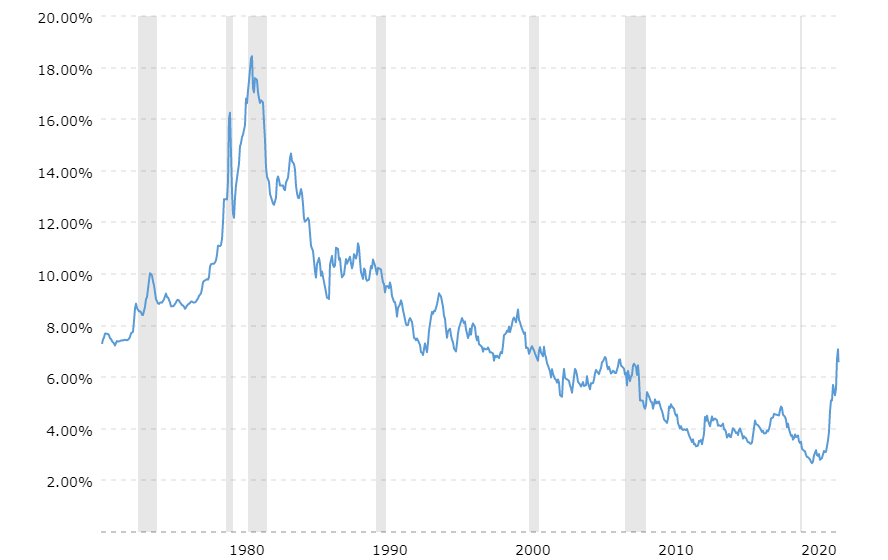
    30-year fixed mortgage rate chart
    30 Year Fixed Mortgage Rate – Historical Chart

    The Fed Funds Rate and mortgage rates in November 2022 are higher than they’ve been recently, but lower than the typical rate over the last 50 years or so.

    Just as the Federal Reserve Board raises interest rates to slow down the economy and tame inflation, when things are bad, it lowers rates. This occurred from about 2008 through about 2015, so mortgage rates were relatively low during that time. The Fed began normalizing rates with periodic increases around the end of 2015, continuing through 2019.

    Then came 2020. When the pandemic hit, the Fed slashed the Fed Funds Rate almost to zero in an extraordinary effort to keep the economy going through shutdowns. The current increases are an attempt to get things back to normal again.

    So how high have rates gotten?

    In 1981, the rate for a 30-year fixed rate mortgage hit an all-time high of 18.45%! Rates came down but stayed relatively high through the decade. They moved into the high single digits in the 1990s.

    The early 2000s saw mortgage rates mostly in the 5% and 6% range, then they dropped to a record low of 3.35% near the end of 2012. For the remainder of the decade, they mostly stayed below 5%. Then, after the pandemic rate cuts, mortgage rates hit a new record low of 2.65% in January 2021. The 50-year average for the 30-year fixed rate mortgage is around 7.5%

    What does the current rate environment mean for today’s buyers?

    Rates will likely rise before they fall. The Federal Reserve Board has indicated they will continue raising the Federal Funds Rate until inflation is tamed. Some economists think we could see increases through much of 2023, though the pace of those increases may slow. Now may be a good time to lock in a rate.

    It’s not worth waiting for a low rate. Looking at rates over the years, it’s clear that they shift. While it’s important to be able to afford a home at the rate you get today, it’s also good to remember that you can refinance when rates drop. Homeowners in every decade have done the same. Meanwhile, you can begin taking advantage of other homeowner perks, like tax savings and home value appreciation.

    Waiting until prices drop may be pointless.  The cost of purchasing a home is rising along with interest rates, so it’s true that demand will likely cool. This could bring prices down. However, before rates started rising, the market had become very tight with limited supply. Even with higher borrowing costs, there’s still a backlog of buyers who could not get into homes before. It’s unlikely demand will fall to a level that drastically impacts prices. In other words, waiting until prices fall to purchase a home may not pay off.

    If prices remain steady, so do home values. Home values are based on the prices consumers are willing to pay. That means the home you purchase today is likely to be a sound investment, appreciating in value over time, just as real estate has done over the last 50 years.

    Lenders have safe, proven programs to help buyers get into homes at current rates. From hybrid adjustable-rate mortgages that start with a lower rate before adjusting to a fixed rate, to points used to buy down interest rates, lenders can offer options. It’s worth talking to one before shutting yourself out of a home based on a fear of rising rates.

    Our experienced staff and preferred lenders stand ready to help you get into the home you want today. Visit www.sahomebuilder.com or call us at 1-855-SAHome1.
  • We’ll Help Take the Worry Out of Home Financing

    We’ll Help Take the Worry Out of Home Financing

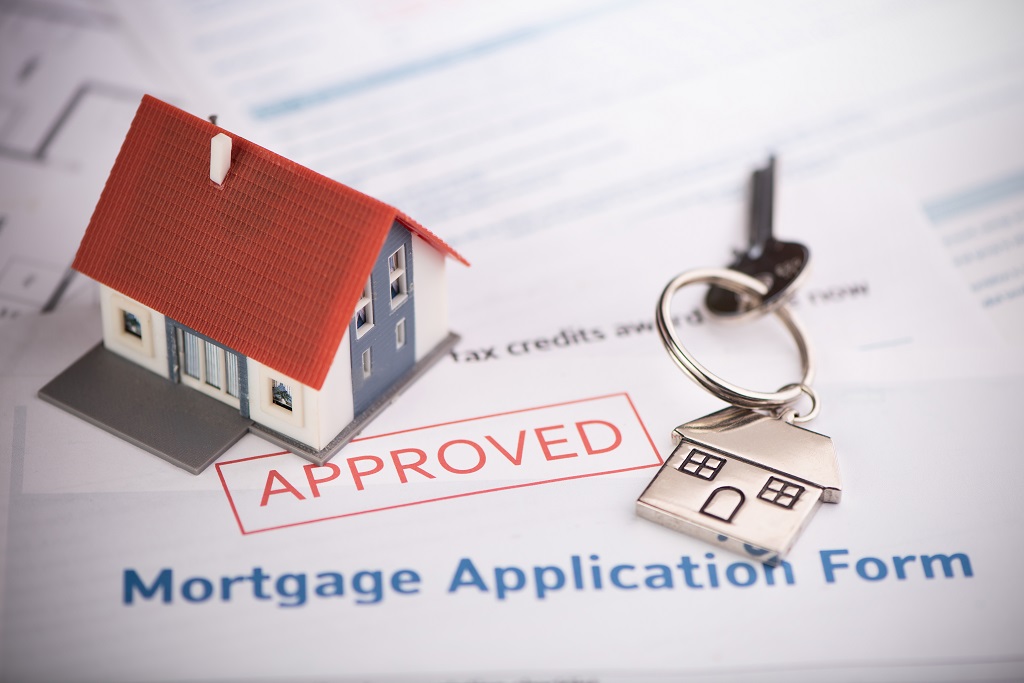
    mortgage loan applicationS&A Homes’ buyers sometimes fall in love with our homes but are worried about how to secure financing, particularly in a time when interest rates are rising. Fortunately, we’ve built a network of lender partners to help you find home financing solutions in a variety of scenarios. In fact, our buyers often tell us that our lender partnerships and their solutions are one of the major benefits of buying with us.

    Flexible Financing Options with Lower Interest Rates

    With our network of lender partners, our buyers have the flexibility to find an interest rate or loan product that will work for them, even when rates are rising. A full range of options, like adjustable-rate mortgages and buydowns, are available to help buyers afford the home they really want.  These lenders can also buyers refinance later if rates fall (and history tells us they will at some point!).

    Construction Loan Options

    For our buyers who build on their own land, our lender partners can facilitate a construction loan. These typically finance the land and payouts to us through their initial phase, with payments due only on the amounts expended so far. At the home’s closing, the construction loan transitions to a typical mortgage loan of the buyer’s choosing.

    Assistance for First-Time Buyers and Lower Down Payment Options

    FHA loans for home buyersOur lenders often help first-time buyers with financing through low down payment or no down payment programs.

    FHA loan products allow for a down payment as low as 3.5%, and some of this down payment amount can come from gifted funds. Conventional loans may also offer down payments as low as 3%. Lenders can often point buyers to down payment assistance programs, too.

    Some of our communities are located in designated as “rural” areas (though they don’t always feel like they’re out in the country!). These areas are eligible for USDA financing, which provides a $0 down payment loan option for buyers who meet certain income thresholds. For U.S. veterans, a VA loan can provide a $0 down payment, too.

    couple approved for home financing

    Unique Scenarios

    Each homebuyer brings a set of financial concerns that are unique to them. Some might include:

    • Self-employed or gig economy workers;
    • Professionals who anticipate a jump in future income (such as new medical professionals or lawyers); or
    • Buyers recovering from a low credit score or negative credit event, such as bankruptcy or forbearance.

    Our network of lenders has so much experience that these scenarios don’t seem as unique to them as they are to the buyers who worry about them. They have overcome many situations that may seem daunting to those who aren’t working in the industry every day.

    These financing solutions help buyers get into the homes they want so they can take advantage of the financial and lifestyle perks of homeownership right away. And because we have an established relationship with these lenders, our buyers know they are reputable and trustworthy.  

    If you have more questions about S&A Homes and home financing, please check out our Financing Solutions page or contact us. We’ll be glad to help.

  • Mortgage Interest Rates and Your New Home Purchase

    Mortgage Interest Rates and Your New Home Purchase

    interest rates

    At S&A Homes, we’ve recently heard a lot of questions from homebuyers about mortgage interest rates. Here is some info that may help, and a few reasons why today’s rates should not discourage you from buying your dream home!  

    How do interest rates affect your home purchase?

    If you’re borrowing money to purchase your home, the interest rate you pay will affect your monthly mortgage payment and will impact the price of home you qualify to purchase.

    Mortgage payments are typically comprised of four factors, referred to in the industry as PITI – principal, interest, taxes and insurance. The principal pays back the money you borrowed. On the most common loans, the amount starts out as a small percentage of your payment and grows each month.

    The interest is your cost to borrow the money. A lower rate means a lower cost. In most cases, the percentage of your payment that goes toward interest diminishes over time.

    Taxes and insurance in each monthly payment are 1/12 of the annual cost of your homeowner’s insurance and real estate taxes. These are usually paid into an escrow account.

    The amount of money you can borrow is determined by how much your payment and other monthly debt payments will be relative to your monthly income. Most lenders want to see this percentage at about 42% or lower. Higher interest rates can push up your monthly payment amount. You won’t be able to spend as much on principal each month, which means you will qualify to buy at a lower price point.

    Here are 4 reasons today’s rates should not discourage you:

    Interest rates are not forever. When rates come down in the future (and according to history, they will), you can refinance into a lower rate.

    Interest rates are still low by historical standards. Back in the early 80s, interest rates on a 30-year fixed rate loan reached 19%! That tells us rates could get higher before they drop again. And they may never drop as much as they did during the pandemic. Rates that low had never been seen before!

    Options for lowering your payment exist. Adjustable-rate mortgages and buydowns are just two of the safe options that exist for rising rate cycles. With a hybrid ARM, you start with a lower rate for a set period of time before it adjusts to a fixed rate. With a buydown, you pay fees up front to lower your rate for a set amount of time.

    Low- and no-down payment or down payment assistance options are available in some scenarios. These allow you to redirect money toward a buydown or paying down other debt (increasing the amount you qualify to pay toward a home payment each month).

    And here are 3 reasons to act now.

    Avalon home plan

    If you wait to buy:

    • The home you really want may not be there tomorrow.
    • You will spend more time and money paying rent (your landlord’s mortgage payment), rather than building your investment in your own home.
    • You may postpone the opportunity to get your kids in the school you really want, establish friendships in the neighborhood you want, or start living the homeowner lifestyle.

    If you have questions about today’s market, please check out our Financing Solutions page or contact us directly at www.sahomebuilder.com/contact-us.